CATDLP Partnership Quarterly Meeting Recap – June 2025
TDL Partnership Meeting Summary
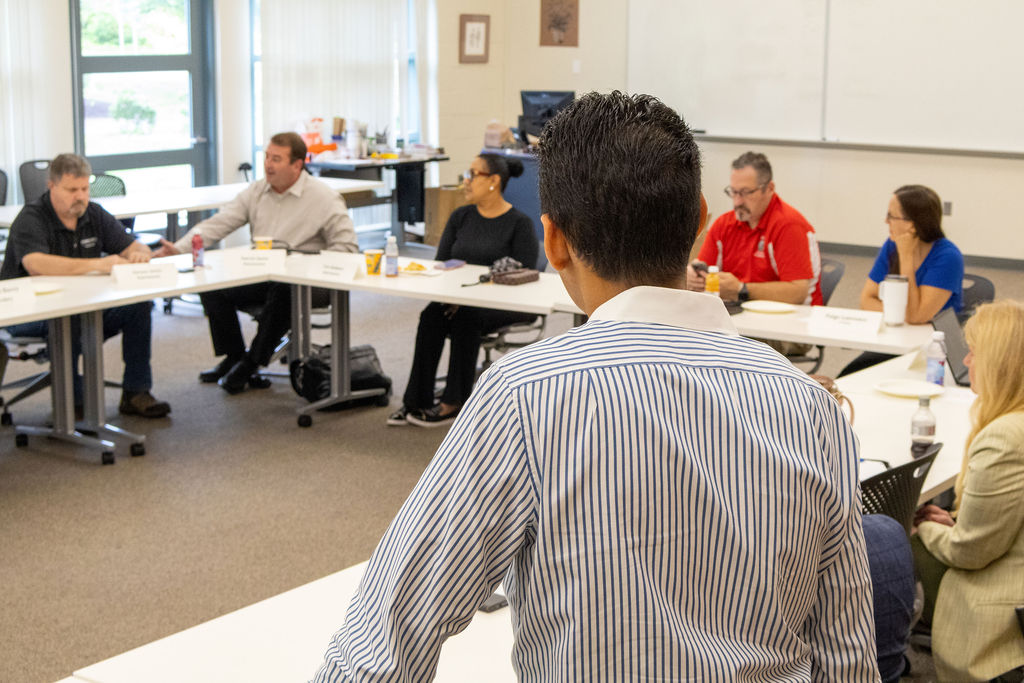
We started the meeting by providing an overview of the Transportation, Distribution, and Logistics (TDL) Partnership. We discussed how the RSP began, the research that preceded the launch and why this collaborative effort was necessary. We highlighted the partnership’s history, emphasizing its commitment to industry promotion, workforce development, and policy advocacy. also, discussed the presentation that Karo from the strategy team presented at the last RSP meeting addressing the diesel mechanic and safety need in this industry. ( attached the slides for the new members to view )
Addressing Industry Challenges
Workforce Development Action Team:
Lou Camacho from CTEC, Sue Passini CT State shared the workforce development Action Team updates, mentioning a recent field trip to several schools to assess the current landscape of diesel mechanic programs, identify gaps, and taking the initial steps to having more facilities training on diesel and automotive post the high school grade. Lou explained the process of students choosing their programs and the challenges of turning away students due to program capacity.
Patrick and James from Eversource spoke about the growing need to attract more talent to the diesel mechanic program who possess a stronger understanding of theoretical concepts, as this foundation is becoming increasingly important alongside technical skills in today’s evolving transportation and equipment. having a program that addresses this gap would be beneficial to recruit from right here in Connecticut instead of recruiting from out of state programs ( New Hampshire and Mass ).
Director of Development for the Town of Berlin discussed the unique role of the business-led group in tackling industry-wide challenges. He particularly focused on transportation barriers for job seekers, underscoring the need for collaborative solutions to improve workforce accessibility.
We have some key partners at the table (CT Rides, DOT as an employer and public partner and Policy supporter, CT State, Allstate, NETTTS, CTEC, Economic Development, Chambers of Commerce, Office of Workforce Strategy and more).
Post-Training Support & Workforce Retention
CTECS shared high job placement rates for Diesel Mechanic trainees, emphasizing the effectiveness of their training programs in transitioning students into the workforce. Additionally, Peterbilt provided insights into employee retention strategies, particularly focusing on ways to retain younger employees after training.
Industry Promotion and Career Awareness:
TDL has a statewide reach, and the steering committee members have elected to create a series of small-scale recruitment events at the American Job Centers across the state, The June Recruitment event will take place in New Haven on June 25th ( Participating employers: NAPA, Bozzuto’s, DATTCO
The action team members will have a group visit to the New Britain stadium on 7/10 at 9 am to see if this would be the venue for the next annual TDL Expo and Career Fair in September
- Event at New Britain Stadium
- Inside – tables or similar for awareness and job fair,
- Outside – examples of work they do – mechanics or whatever we think might be not just visually appealing, but something students (and post-high graduates) might be interested in finding out about
- Maybe food trucks and/or food made by Bees staff members
- Goals
- To get students, guidance counselors and maybe even parents to the Stadium to understand and better “GET” the TDL sector and the opportunities it offers.
Key Discussion Points
- Industry Participation & Employer Voice:
There is strong emphasis on embedding the employer voice into program design to ensure students are better prepared for real-world expectations—both in technical ability and job readiness. Some employers noted that candidates are not always “job ready,” lacking soft skills and awareness of workplace behavior. - Diesel Program Capacity & Demand:
Diesel programs, such as the one at Vinyl Tech, are currently at full capacity (18 students/year) with high interest and waitlists. While expansion is limited by space and staffing, there is potential to grow if more space or additional faculty can be added. The program has seen success with students transitioning into diesel roles even from automotive programs due to workforce demand. - Need for Broader Career Awareness:
Many students and the public are unaware of the viable and lucrative careers in diesel mechanics, fleet management, and related fields. Increasing industry promotion, school engagement, and job fair participation were identified as key strategies to raise awareness. - Workforce-Education Collaboration:
Partners like CT State, Southern Connecticut State University, and Eversource expressed interest in supporting training through curriculum input, equipment donations, and co-creating micro-credentials in areas like fleet management and logistics. Non-credit and credit-based training options were discussed as flexible pathways for both new students and current workers. - Action Steps:
- Continue field visits to schools to assess training environments.
- Explore program expansion at high-demand schools.
- Pursue micro-credentialing and short-term certifications with input from employers.
- Leverage employer partnerships for equipment, mentorship, and job placements.
- Address career readiness by better preparing students for interviews, resumes, and soft skills.
Stay tuned for the next quarterly meeting date and location.